

Dolphin Tours in Kauai: What You’re Likely to See Offshore
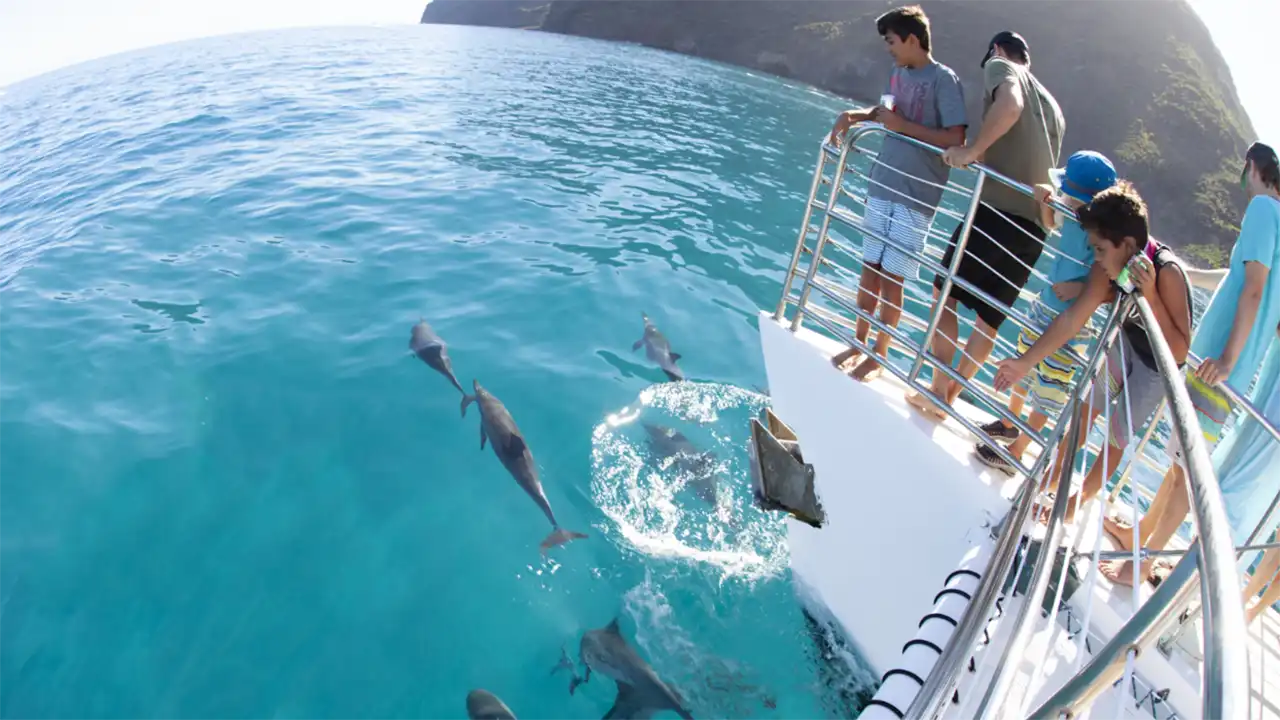
If you’ve spent any time on the water around Kauai, you learn pretty quickly that dolphins don’t do “scheduled appearances.” They show up on their own terms, and that’s part of what makes a true dolphin tour worth experiencing.
In this post, we’re going to go over some information about dolphins we see in Kauaʻi and throughout the Hawaiian Islands, and break down how likely it is to see dolphins during your stay.
Why Kauaʻi’s Offshore Waters Attract Dolphins
Kauaʻi rises steeply out of the Pacific, and that steepness continues underwater. In many areas, you don’t have to go far before the sea bottom drops and the ocean turns into a deep-water habitat. That matters because deep water supports the food chain on which dolphins depend.
Offshore waters also stay more stable. Less runoff, fewer shoreline disruptions, and more consistent currents mean bait moves, predators follow, and dolphins often end up right where you’d expect them to be.
How Ocean Depth and Currents Shape Marine Life
Around the Hawaiian Islands, currents and swirling eddies can help move nutrients upward and fuel bursts of productivity, even in a part of the ocean that can otherwise feel like a “blue desert.” Those eddies can create conditions that concentrate plankton, then bait, then larger fish, then the dolphins that hunt them.
On the boat, we’re not staring at charts the whole time, but we are reading what the ocean is doing in real time: surface texture, current lines, and water color shifts that often hint at what’s going on below.
Dolphin Species Commonly Seen on Kauai Tours
Kauaʻi is known for four dolphin species that are frequently encountered: spinner dolphins, pantropical spotted dolphins, rough-toothed dolphins, and Pacific bottlenose dolphins.
That doesn’t mean you’ll see all four in one outing, but those are the “usual sighting” when we’re offshore.
Spinner Dolphins and Their Daily Resting Patterns
Spinner dolphins are the ones people picture when they think “Hawaiʻi dolphins,” especially when they’re leaping and twisting.
The key thing most visitors don’t realize is that spinner dolphins have a very specific daily rhythm. Many pods rest during daylight hours and feed more actively at night, which is why ethical operators respect their resting behavior. NOAA notes federal protections for spinner dolphins in Hawaii, including rules on how close people can approach.
Bottlenose Dolphins and Offshore Behavior
Bottlenose dolphins are heavier-bodied, confident, and often more “purposeful” in how they move. Research groups in Hawaii note that bottlenose dolphins are commonly seen in shallower-water areas around the main islands, but they can also be found around Kauaʻi and Niʻihau.
When we see bottlenose offshore, it’s often tied to hunting behavior or travel. If they choose to bow ride, they’ll do it with authority.
Less Common Dolphin Sightings in Deeper Water
Pantropical spotted dolphins can be especially fun to watch because they’re fast and often social, and they’re known to bow ride. Long-term research in Hawaii reports them across a wide range of depths, including deep offshore waters.
Rough-toothed dolphins are another possibility; NOAA describes them as a distinct species with a longer beak and a distinctive profile.
Sometimes you’ll also hear about other “drive-by” species in Hawaiian waters, because many whales and dolphins pass through the region. NOAA notes there are at least two dozen cetacean species that spend all or part of their lives around the Hawaiian Islands.
Typical Dolphin Behavior You May Observe
Dolphins don’t just “swim.” They communicate, hunt, rest, and play, and the behavior you see depends on their mood, the sea conditions, and what’s happening with food.
Bow Riding and Playful Movement
Bow riding is what most guests hope for, and when it happens naturally, it’s unreal. Dolphins can draft off the pressure wave created by the boat, conserving energy while having a little fun.
The important part is the word naturally. When dolphins want to interact, they’ll make that decision.
Social Pods, Calves, and Group Dynamics
Dolphins are social, and pods have structure. You might see adults flanking calves, groups splitting and regrouping, or coordinated movement that looks almost choreographed.
When calves are present, we’re extra conservative. The goal is a clean, calm viewing experience that doesn’t change their behavior.
Other Marine Life Often Spotted on Dolphin Tours
If you go offshore around Kauaʻi and only look for dolphins, you’re missing half the show. The open ocean has its own cast of characters.
Humpback Whales During Winter Months
In the Winter, humpbacks are the headliners. The Hawaiian Islands Humpback Whale National Marine Sanctuary notes that whales are generally seen in Hawaii from November through April, with peak months often January through March.
When whales are around, a dolphin tour can turn into a whale day fast. That’s not a bad problem.
Sea Turtles, Flying Fish, and Pelagic Species
You’ll often spot honu (sea turtles) when conditions are calm enough to pick up their silhouettes at the surface. Flying fish are another offshore staple, and when they start bursting out of the water, it usually means something is chasing them from below.
Depending on the day, you can also see offshore fish activity, including tuna or other pelagic predators, indicated by birds and surface commotion.
Seabirds Seen While Dolphin Watching
Seabirds are the ocean’s scouts. If you learn to watch birds, you will start finding wildlife more quickly.
Frigatebirds, Boobies, and Shearwaters
On Kauaʻi waters, you’ll commonly see frigatebirds, boobies, and shearwaters working the wind lines and scanning for opportunities. Their flight patterns tell you a lot: frigatebirds cruise high and slow, boobies commit hard when they dive, and shearwaters skim and track bait.
What Bird Activity Can Signal Offshore Feeding
When birds start circling, dipping, or stacking up over a single patch of water, that’s often a sign that bait is being pushed up. Sometimes dolphins are the reason. Sometimes it’s tuna. Either way, it’s usually worth a closer look, at a respectful distance.
Seasonal Factors That Affect What You’ll See
Kauaʻi doesn’t have dramatic temperature swings like the mainland, but seasons still matter offshore.
Winter vs Summer Wildlife Differences
Winter brings humpbacks, and that changes the whole feel of a trip. NOAA’s viewing guidelines also emphasize required distances for humpbacks, which our captains follow closely.
Summer tends to bring calmer seas, which can improve visibility and comfort, and it often makes it easier to spot surface signs such as fins, splashes, and bird activity.
Morning Conditions and Visibility Offshore
Mornings often offer the clearest window: less wind, less chop, and better surface visibility. That doesn’t mean afternoons can’t be great, but if you’re chasing the clearest viewing conditions, earlier is usually best.
The Role of Local Captains and Crew
A good dolphin tour isn’t just a boat ride. It’s reading the ocean like a language.
Responsible Wildlife Viewing Practices
This matters more than ever. Dolphin tourism has grown popular, and not everyone does it well.
NOAA’s marine wildlife viewing guidance recommends staying at least 50 yards from dolphins and small whales, and it’s especially clear about spinner dolphins: federal law prohibits swimming with, approaching, or remaining within 50 yards of spinner dolphins in Hawaii.
DLNR materials also reinforce respectful protocols, such as not “leapfrogging” animals —racing ahead to position a vessel in their path— and limiting time spent around them.
Offshore vs Nearshore Dolphin Encounters
To give our guests the best chance to see dolphins behave naturally, we travel offshore rather than hugging the coastline.
Why Most Dolphin Activity Happens Offshore
Offshore is where the hunting lanes are. It’s also where dolphins can behave naturally without being boxed in by shallow water, shoreline pressure, and heavy traffic in certain areas.
How Distance from Land Improves Sightings
Once you’re away from land, you’re working with deeper water and broader habitat. That means more opportunity for sightings, not because we’re “finding a guaranteed spot,” but because we’re in the environment dolphins actually use.
Why Dolphin Tours Offer More Than Just Dolphins
Even when dolphins are the headline, the offshore experience is the real value.
The Full Offshore Experience Around Kauai
Kauaʻi’s offshore waters are large, dramatic, and alive. Some days it’s dolphins and seabirds. Some days it’s whales and calm, glassy seas. Sometimes it’s the kind of sunrise you remember for years.
Why Every Tour Is Different Depending on Conditions
No two days match. Wind, current, swell, and wildlife movement all change the script. That’s not a downside. That’s what makes it unique.
If you want the best shot at a memorable offshore wildlife day, ride with an experienced crew that knows these waters, respects the animals, and understands that the ocean sets the rules. That’s the standard our captains and crew at Kauai Sea Tours bring to every tour.
FAQs
Are dolphin sightings guaranteed on Kauai dolphin tours?
No. Dolphins are wild animals. A good operator can put you in the right offshore habitat and read conditions intelligently, but no one can guarantee wildlife on demand.
What dolphins are most commonly seen around Kauai?
Kauai Sea Tours notes four commonly encountered species: spinner dolphins, pantropical spotted dolphins, rough-toothed dolphins, and Pacific bottlenose dolphins.
When is whale season if we also want to see humpbacks?
Humpbacks are generally seen in Hawaii from November through April, with peak season often January through March.
Dolphins make Kauaʻi special.
Dolphin tours in Kauaʻi are best when you treat them like a real offshore wildlife experience, not a staged attraction. Offshore waters give you the best chance at seeing dolphins behaving naturally, plus seabirds, turtles, and, in winter, humpback whales. If you’re interested in the chance to see Kauaʻi’s unique marine life, book a boat tour with us at Kauai Sea Tours.

Darren Paskal – General Manager
A dedicated steward of Kauai Sea Tours and a member of the founding family, Darren Paskal has led the company with passion and innovation for nearly a decade. With a sharp focus on customer experience, he’s been instrumental in expanding the Kauai Sea Tours fleet by introducing the first express tour of the Nā Pali Coast, and designing the region’s first luxury tour boat. Darren blends engineering expertise with a deep love for Kauai’s coastline, continually shaping unforgettable ocean adventures for guests from around the world.