

Mahaʻulepu Heritage Trail Guide
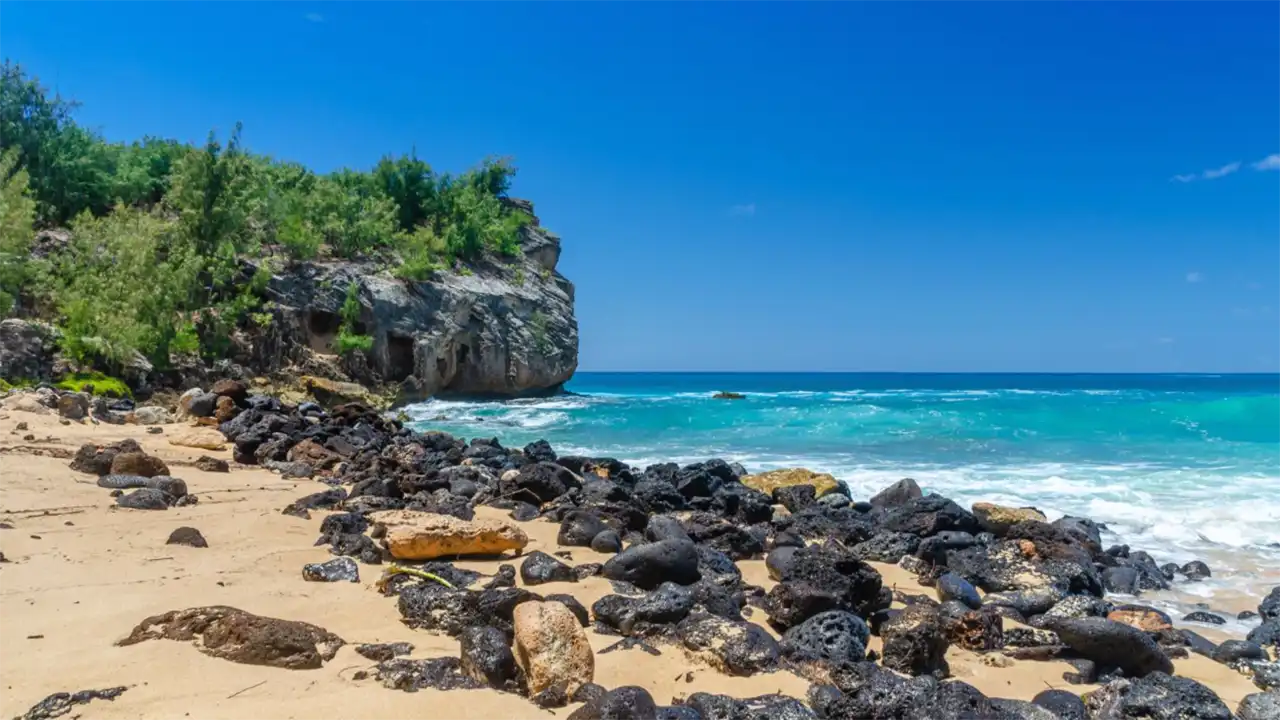
The Mahaʻulepu Heritage Trail runs along Kauai’s southern coast, offering a rare look at a preserved stretch of shoreline shaped by history, geology, and traditional land use.
Beginning at Shipwreck Beach, this coastal path follows limestone cliffs, pocket beaches, and open pastureland before reaching Mahaʻulepu Beach. Although this trail runs alongside modern development, the shoreline itself preserves a sense of how this coast once functioned.
What sets the Mahaʻulepu Heritage Trail apart is its balance. It is accessible enough for most visitors yet rugged enough to feel largely unchanged. Hikers, history enthusiasts, and coastal explorers will find that this trail offers sweeping ocean views and a deeper understanding of how Native Hawaiians lived along this shoreline long before modern tourism reshaped the surrounding area.
The History of the Mahaʻulepu Heritage Trail
Ancient Hawaiian Significance
Long before roads and hotels, Mahaʻulepu was an active coastal region used by Native Hawaiians for fishing, gathering, and settlement. The area provided access to marine resources, freshwater seeps, and fertile lands nearby. Families relied on the shoreline for sustenance, and footpaths connected fishing areas with inland communities.
The modern trail loosely follows these traditional routes. As you hike, you are moving through land once managed under the ahupuaʻa system—a traditional Hawaiian land division that extended from the mauka (mountains) to the makai (sea), designed to ensure that freshwater streams, forests, loʻi kalo (taro farms), and fisheries were shared and sustainably managed within the community. Mahaʻulepu remains one of the clearer examples of how coastal areas supported daily Native Hawaiian life.
Archeological Sites and Petroglyphs
Scattered throughout the area are archeological remnants that reflect centuries of use. Stone foundations, rock alignments, and petroglyphs are located near the trail and along the coast. Some carvings depict human figures and symbols believed to represent daily activities or spiritual beliefs.
These sites are protected by law. They are not marked with signs or barriers, so awareness and respect are essential. Observing from a distance helps preserve these cultural resources for future generations.
Plantation and Ranching Era History
During the 19th century, the land surrounding Mahaʻulepu transitioned through plantation and ranching use. Cattle grazing became common, and portions of the area were fenced or cleared to support agriculture. While this era brought economic change to Kauai, it also altered traditional land practices.
Remnants from this period still exist in subtle ways, including old roads and pasture boundaries. Today, conservation efforts aim to balance access with preservation, keeping development from overtaking this historic stretch of open coastline.
What You’ll See Along the Trail
Coastal Cliffs and Limestone Formations
The defining visual feature of the Mahaʻulepu Heritage Trail is its limestone coastline. Over time, wind and wave erosion have carved sharp cliffs, narrow shelves, and uneven rock formations that drop directly into the ocean.
In some areas, blowholes form when waves force air and water through openings in the rock.
These cliffs provide expansive views of the Pacific and a dramatic reminder of the island’s geological age. They also demand caution, as limestone can be brittle and unstable near the edges.
Hidden Beaches and Tide Pools
Several small beaches and coves appear along the trail, including Mahaʻulepu Beach at the eastern end. These pockets of sand are often quiet and feel removed from the rest of the island. During calm conditions, tide pools form among the rocks, offering a close look at small fish and marine life.
Swimming is not recommended as ocean conditions change quickly on the south shore. Strong currents and shore break are common, especially during the winter months.
Native Plants and Wildlife
Despite constant exposure to salt and wind, native coastal plants thrive along the trail. Low-growing naupaka, hardy grasses, and shrubs dominate the landscape. These plants play an essential role in stabilizing soil and supporting wildlife.
Seabirds are frequently seen soaring above the cliffs, and Hawaiian green sea turtles are often spotted offshore. The lack of development makes this area a vital habitat corridor along Kauai’s southern coast.
Bird Watching Along the Mahaʻulepu Heritage Trail
The mix of open coastline, cliffs, and nearby wetlands makes the Mahaʻulepu Heritage Trail a solid bird-watching area on Kauai’s south shore. Below is a clear breakdown of species you may encounter, grouped by type and habitat.
Native and Endemic Hawaiian Birds
- Hawaiian Goose (nēnē) – Branta sandvicensis
- Hawaiian Duck (koloa) – Anas wyvilliana
- Hawaiian Gallinule (‘Alae ‘ula) – Gallinula galeata sandvicensis
Seabirds and Coastal Flyers
- Laysan Albatross (mōlī) – Phoebastria immutabilis
- Hawaiian Petrel (‘uaʻu) – Pterodroma sandwichensis
- Wedge-tailed Shearwater (‘uaʻu kani) – Ardenna pacifica
- Great Frigatebird (‘iwa) – Fregata minor
- Brown Booby (‘ā) – Sula leucogaster
- Brown Noddy (noio kōhā) – Anous stolidus
- Black Noddy (noio) – Anous minutus
- Sooty Tern (‘ewa‘ewa) – Onychoprion fuscatus
Shorebirds and Seasonal Migrants
- Pacific Golden-plover (kōlea) – Pluvialis fulva
- Ruddy Turnstone (‘akekeke) – Arenaria interpres
- Lesser Scaup – Aythya affinis
Common and Introduced Species
- Spotted Dove – Spilopelia chinensis
- Zebra Dove – Geopelia striata
- Rose-ringed Parakeet – Psittacula krameri
- Common Myna – Acridotheres tristis
- House Sparrow – Passer domesticus
- African Silverbill – Euodice cantans
- Java Sparrow – Lonchura oryzivora
- Chestnut Munia – Lonchura atricapilla
Hiking the Mahaʻulepu Heritage Trail
Trailhead Locations and Access
Most hikers access the trail from Shipwreck Beach near Poipu. Parking is available near the beach access area, and the trail begins by heading east along the shoreline. There is no formal entrance or visitor center, so preparation is essential.
The route is straightforward, following the coast with minimal elevation change. Navigation is simple, but staying aware of your surroundings is key.
Distance, Difficulty, and What to Expect
The whole out-and-back hike covers approximately 3.5 to 4 miles, depending on how much you explore along the way. Elevation gain is minimal, but the hike can still feel demanding due to uneven terrain, sun exposure, and wind.
Expect narrow sections near cliffs, rocky footing, and little shade. This is not a paved or groomed trail, and it rewards those who move carefully and deliberately.
Best Time of Day to Hike
Early morning is the best time to hike the Mahaʻulepu Heritage Trail. Cooler temperatures and calmer winds make the experience more comfortable, and the light is better for viewing the coastline. Midday hikes can be hot and exposed, especially during summer.
Tips for a Great Hike
What to Bring
Carry plenty of water. There are no facilities, shade structures, or refill stations along the trail. Sun protection is essential, including a hat and reef-safe sunscreen. Sturdy footwear is strongly recommended, as limestone and loose rock can be hard on sandals or casual shoes.
A small pack with snacks and a phone or camera is usually sufficient for most hikers.
Respecting the Land and Cultural Sites
Mahaʻulepu is culturally significant land. Do not disturb rocks, plants, or archeological features. Stay on established paths whenever possible, and pack out everything you bring. Respect for the land helps ensure continued access and preservation.
FAQs About the Mahaʻulepu Heritage Trail
How long does it take to hike the trail?
Most hikers spend 2-3 hours completing the trail, including stops for photos and rest. Allow extra time if you plan to explore beaches or tide pools.
Is the Mahaʻulepu Heritage Trail family-friendly?
The trail can be suitable for older children who are comfortable walking on uneven ground. Strollers are not appropriate, and close supervision is necessary near cliff areas.
Can you swim at the beaches along the trail?
Swimming is possible during calm conditions, typically in summer. Continually assess surf, currents, and weather before entering the water. Always practice basic ocean safety.
Is the trail accessible year-round?
Yes, the trail is open year-round. Weather and ocean conditions vary seasonally, with stronger winds and higher surf common in winter.
Walking Through Kauai’s Living History
The Mahaʻulepu Heritage Trail offers one of the most honest hiking experiences on Kauai. It is not polished or commercialized, and that is precisely its strength. For visitors looking to understand Kauai beyond beaches and resorts, Mahaʻulepu is essential. Pairing a land-based experience like this with time in the ocean offers even more perspective, with Kauai Sea Tours offering an up-close view of Kauai’s rugged beauty from the water.

Darren Paskal – General Manager
A dedicated steward of Kauai Sea Tours and a member of the founding family, Darren Paskal has led the company with passion and innovation for nearly a decade. With a sharp focus on customer experience, he’s been instrumental in expanding the Kauai Sea Tours fleet by introducing the first express tour of the Nā Pali Coast, and designing the region’s first luxury tour boat. Darren blends engineering expertise with a deep love for Kauai’s coastline, continually shaping unforgettable ocean adventures for guests from around the world.