

Humpback Whales Kauai: Migration & Facts
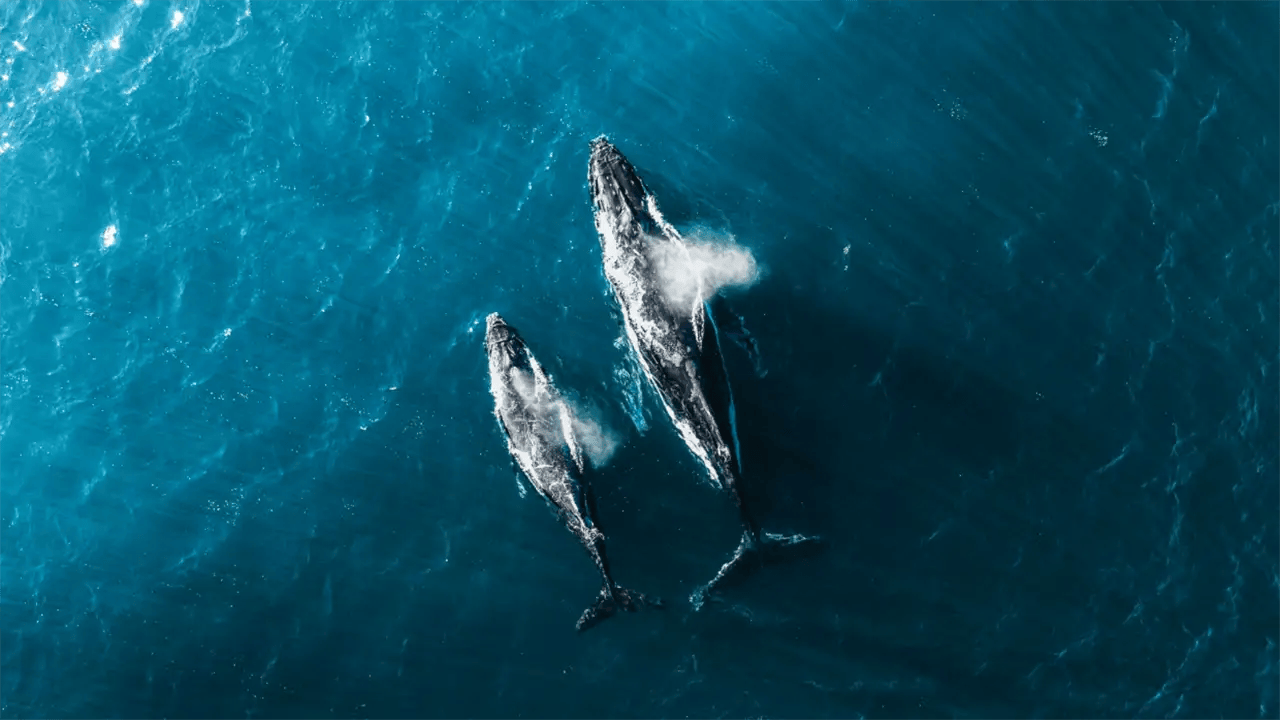
Humpback whales return to Kauai’s waters each winter to mate, give birth, and nurse their calves. Whale sightings generally occur from November through April, with peak season running from January through March, according to the Hawaiian Islands Humpback Whale National Marine Sanctuary.
For visitors, that means a winter trip can include watching a whale surface offshore, lift its tail before diving, or breach above the water. Knowing when to look and what to watch for adds context to the experience, whether you’re watching from shore or exploring Kauai whale-watching tour options.
When Can You See Humpback Whales in Kauai?
January through March is the strongest planning window for seeing humpback whales around Kauai. Whales arrive and depart throughout the season, so that sightings can occur year-round with no fixed opening or closing date.
| Time of year | What to expect |
| November–December | Early arrivals, with whale activity building as winter progresses |
| January–March | The usual peak in humpback abundance in Hawaiian waters |
| April–May | The season winds down; some whales remain before migrating north |
| June–October | Outside the main season; don’t plan a trip around humpback sightings |
NOAA’s whale-season guidance includes a broader November through May window, accounting for whales that linger into spring. This biological window differs from tour operators’ schedules. Kauai Sea Tours offers dedicated whale-watching trips from December through March.
If whales are a priority, plan your travel dates around the season first, choose your travel month first, then compare available tours. A year-round boat excursion does not mean year-round humpback sightings.
Why Do Humpback Whales Migrate to Hawaii?
Humpback whales use different habitats for feeding and reproduction. Northern waters provide abundant food, while Hawaii’s warm coastal waters serve as winter breeding and calving grounds, where whales mate, give birth, and nurse their young.
From Northern Feeding Grounds to Kauai
Many humpback whales visiting Hawaii travel roughly 3,000 miles from Alaska. Their northern feeding grounds also extend to other parts of the North Pacific, including northern British Columbia and the Bering Sea.
According to NOAA Fisheries, some humpbacks can complete the Alaska-to-Hawaii journey in as few as 28 days. That is a documented fast crossing, rather than a timetable every whale follows.
Feeding in Summer, Raising Calves in Winter
During the feeding season, humpbacks eat krill and small fish and build body-fat reserves. Adults feed very little in Hawaii, relying largely on those stored reserves during their stay.
Mother whales also produce rich milk to nourish calves, helping them grow and develop the strength needed for the migration back to northern feeding grounds. Hawaii’s Division of Aquatic Resources describes this seasonal cycle of feeding, migration, and calf development.
Kauai is part of that wider Hawaiian breeding habitat. A whale seen offshore may be traveling, resting, nursing a calf, or interacting with other whales.
Humpback Whale Facts to Know Before Your Trip
A few details can help you recognize and appreciate the animals you’re watching:
- They can reach about 60 feet long and weigh up to approximately 40 tons. Size varies between individuals.
- They have baleen instead of teeth. These plates filter small prey from seawater.
- Their tails help researchers identify them. Fluke markings, shape, and scars create distinctive patterns that researchers can match across photographs.
- They are long-lived mammals. NOAA estimates a lifespan of about 80–90 years.
These characteristics also help scientists track individual whales and understand their movements across oceans. See NOAA’s humpback whale species profile for more.
Humpback whales are also known for their songs. During the breeding season,n male humpbacks produce complex songs that can carry through the water. Scientists continue to investigate exactly how those songs influence reproductive behavior. The sanctuary’s whale behavior research explores what researchers have learned about these behaviors.
Humpback Whale Behaviors You Might See
A breach is easy to notice, but quieter surface movements can be just as interesting. NOAA’s humpback behavior guide describes several common displays:
| Behavior | What it looks like |
| Blow | A visible plume as the whale surfaces and exhales |
| Breach | A whale launches much of its body out of the water and lands with a splash |
| Tail slap | The whale raises its tail flukes and strikes the surface |
| Pectoral fin slap | One or both long side fins slap the water |
| Spy hop | The whale rises vertically with its head above the surface |
| Fluke-up dive | The tail lifts above the water as the whale descends |
Start by scanning the ocean with your eyes, then use binoculars once you locate activity. Look across the water between your viewing position and the horizon, rather than concentrating only on the distant edge.
If a whale disappears, keep watching the area. Surfacing and diving are part of the encounter; don’t expect a whale to remain visible the entire time.
Where Can You See Humpback Whales Around Kauai?
You can watch for humpback whales from land or take a boat tour. Each offers a different way to observe these animals in their natural habitat.
Watching From Shore
Poʻipū Beach on the South Shore and the Kapaʻa Overlook on the East Side are established whale-watching locations identified by Hawaii’s official tourism website.
Bring binoculars and give yourself time to scan. A distant blow may be easier to spot than the whale’s body, especially when it surfaces briefly.
Choose an accessible viewing area, respect posted closures, and stay back from cliff edges and breaking waves. Shore viewing works well as a flexible addition to your day: you can stop, watch, and return another time without committing to a sailing.
Watching From a Boat
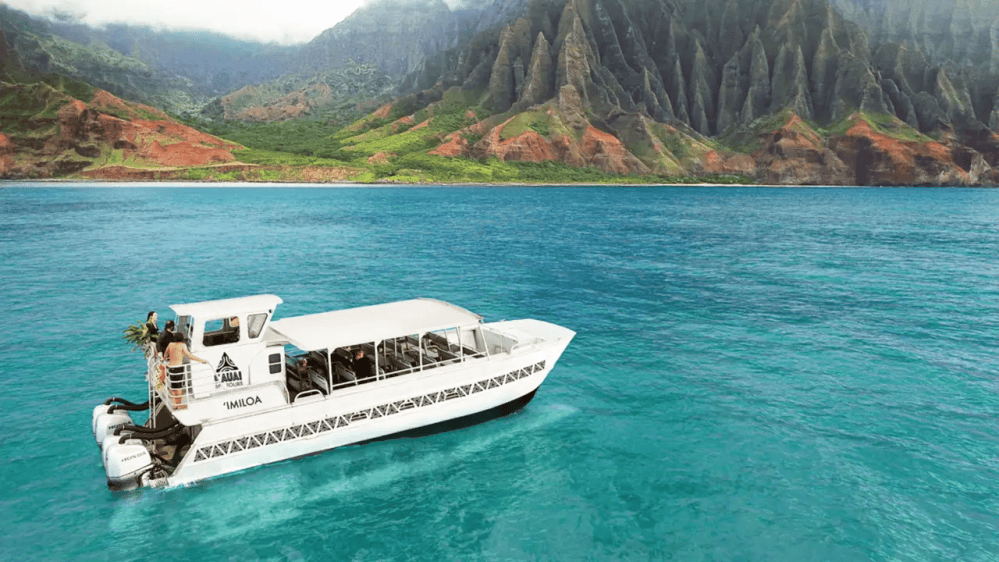
A boat excursion combines time on the water with crew commentary and views you can’t get from a single shoreline lookout. During winter, whale sightings may be part of a Nā Pali Coast boat tour.
At Kauai Sea Tours, our Deluxe Nā Pali Sunset Cruise aboard Lucky Lady features coastal scenery and sunset views, with humpback whales among its seasonal highlights from December through March. This is a non-snorkeling excursion.
Tour routes depend on wind and sea conditions. A planned Nā Pali trip may reroute to the South Shore. Before booking, review the tour details and choose an excursion based on the overall experience, keeping in mind that whale sightings are not guaranteed.
How to Prepare for Whale Watching in Kauai
A little preparation makes it easier to focus on the water:
- Keep your schedule flexible. Booking a tour earlier in your stay may leave room to reschedule if conditions affect the trip.
- Bring sun protection and a light layer. Pack sunglasses, sunscreen, and a cover-up suitable for time on the boat.
- Protect your camera or phone. Use a secure strap and keep equipment protected from spray.
- Review passenger requirements. Age limits, mobility requirements, and other restrictions vary by excursion.
- Check your departure details. Confirm the check-in location and time for your specific reservation.
Review the Kauai Sea Tours FAQs and your selected tour page before arrival. If you have questions about suitability or seasonal availability, ask the team before booking.
Responsible Whale Watching: Give Humpbacks Space
In Hawaii, it is illegal to approach within 100 yards of a humpback whale. Watching from a boat, kayak, paddleboard, or the water does not remove that restriction. Follow NOAA’s whale-viewing guidance, and never pursue an animal to get a closer photograph.
On a guided excursion, follow the captain’s instructions and let the crew manage the vessel’s position.
Humpbacks remain protected under the Marine Mammal Protection Act. Although the Hawaii distinct population segment is no longer listed under the Endangered Species Act, vessel strikes, entanglement, and disturbance remain concerns. Hawaii’s humpback protection information explains why responsible viewing still matters.
Frequently Asked Questions
Can you see humpback whales in Kauai during summer?
Summer is outside the main humpback season. Choose a summer cruise for its coastal scenery or other advertised activities, and plan a winter visit if humpback whales are your priority.
Are whale sightings guaranteed?
Humpbacks are wild animals, and their location and behavior vary. Peak-season travel improves your chances of seeing them, but it can’t guarantee a sighting or a particular display, such as breaching.
Can you swim with humpback whales in Kauai?
No! Don’t enter the water to approach or swim with humpbacks. Hawaii’s 100-yard approach restriction applies to swimmers, too. Watch from shore or a boat and give the animals plenty of space.
Plan Your Kauai Whale-Watching Trip
For a trip centered on humpback whales, aim for January through March and allow some flexibility in your itinerary. Think about whether you want a dedicated whale-watching outing or a broader coastal cruise with seasonal wildlife opportunities.
Contact Kauai Sea Tours to confirm the options available for your dates and choose an excursion that fits your group.