

Summer Wildlife In Hawaii: Everything to Know
Summer in Hawaii has its own rhythm on the water. The days are long, the trade winds shape the afternoon seas, and the coastline feels alive from the cliffs down to the reef. On Kauai, especially along the Nā Pali Coast, summer is one of the best times of year to understand how much wildlife depends on the ocean, the cliffs, the remote beaches, and the protected spaces between them.
For visitors planning a summer boat tour, here is what to know about Hawaii’s summer wildlife, what you may see offshore, and why the Nā Pali Coast is often best understood from the water.
Why Summer Is a Special Time for Wildlife in Hawaii
Hawaii has wildlife activity year-round, but summer brings calmer, warmer weather and longer daylight. On Kauai’s north and west-facing coastline, this can make the ocean feel more open and approachable compared to the heavier winter surf season.
That does not mean every summer day is glassy. The ocean still decides. Trade winds, south swells, currents, and localized weather all affect what a captain can safely access. But when conditions line up, summer can provide some of the clearest, most complete views of the Nā Pali Coast.
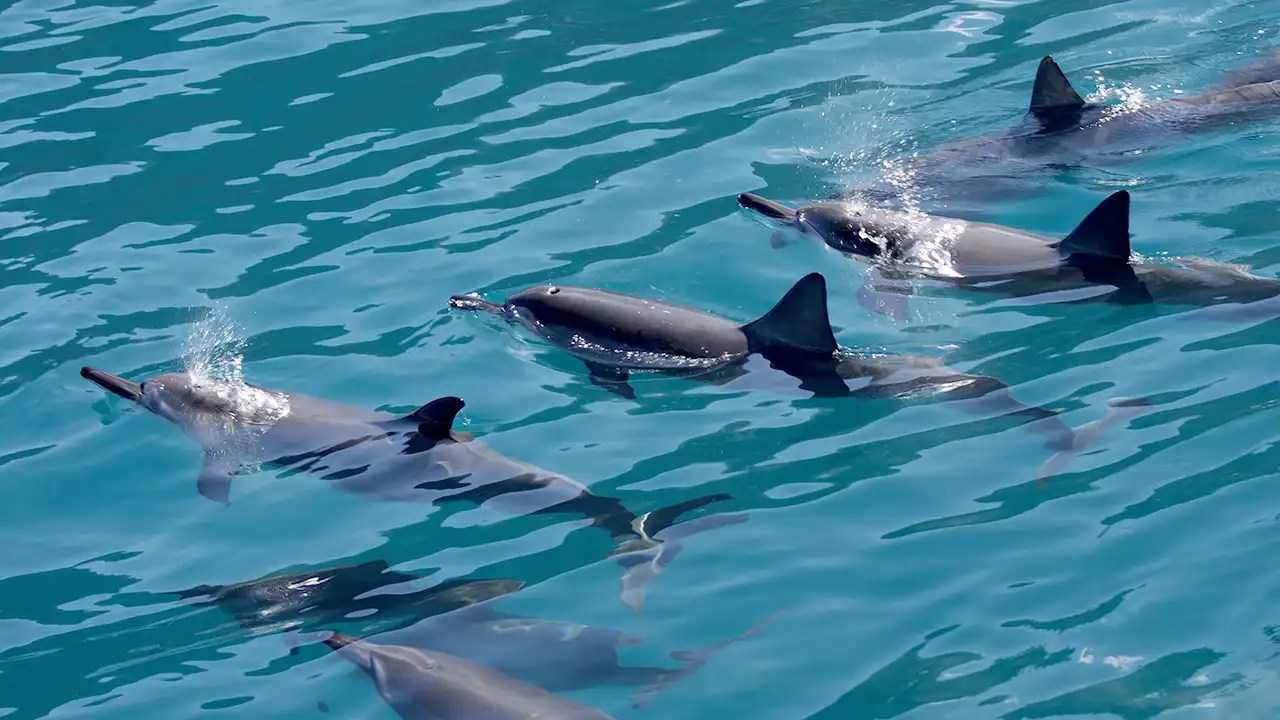
It is also an important season for several marine species. Sea turtle nesting season across the Hawaiian archipelago generally runs from mid-April through September, sometimes later, and NOAA recommends viewing turtles from a respectful distance without approaching or touching them. Hawaiian spinner dolphins are also protected, and in Hawaii, it is illegal to swim with, approach, or remain within 50 yards of them, including by vessel, paddleboard, drone, or other object.
A good wildlife experience starts with that understanding. We are guests in their habitat.
Water-Level Views That Show the True Height and Depth
The Nā Pali Coast is impressive from any angle, but from sea level, its scale changes completely. The cliffs rise thousands of feet above the water, and from a boat, you can see the full vertical drop from ridgeline to ocean.
That perspective matters for wildlife viewing because the coastline is not just scenery. The cliff faces create nesting areas for seabirds, and the valleys funnel wind and rain. The reefs and nearshore waters create feeding zones. The deeper offshore water supports larger marine life moving along the island’s edge.
From land, you may see pieces of this environment. From the water, you see the system working together.
Sea Caves, Arches, and Lava Formations
Nā Pali’s sea caves, arches, and lava formations are some of the most memorable features of the coastline. They were shaped over time by waves, erosion, volcanic rock, and the ocean’s constant movement. In summer, when conditions allow, boats may get close enough for guests to appreciate the detail in the rock, the color in the water, and the way light moves through the caves.
These formations also influence wildlife. Small fish often gather near ledges and rocky structures. Seabirds use the cliffside air currents above them. Turtles may surface near reefy areas when conditions are right. Every arch, cave, and lava wall is part of a larger marine environment.
Why Many Nā Pali Sea Caves Are Only Accessible by Boat
Many of the sea caves along Nā Pali cannot be reached on foot. The cliffs are too steep, the terrain is too exposed, and rock, surf, or private and protected land boundaries often cut off the shoreline.
Seasonal Cave Access and Ocean Conditions
Summer generally creates better opportunities for sea cave viewing than winter, but access is never guaranteed. Cave entry depends on swell direction, surge, tide, wind, and the captain’s judgment. Even small changes in ocean energy can make a cave unsafe.
Remote Beaches with No Road Access
Some of Kauai’s most beautiful beaches sit below cliffs with no road leading in. These beaches are part of what makes Nā Pali feel so untouched. They are also important habitat areas for birds, turtles, fish, and shoreline species.
From a boat, you can see these remote beaches without disturbing them the way heavy foot traffic might. That balance matters. The goal is not to turn every hidden beach into a stop. The goal is to experience the coastline while respecting why these places have remained so special.
Hidden Beaches You Can’t Reach on Foot
Cliffs, valleys, or dense terrain often back Nā Pali’s hidden beaches. Some can only be seen from the water. Others may be reachable by advanced hiking routes, but only with significant effort, exposure, and risk.
How Boats Respect Natural Barriers While Allowing Access
Natural barriers protect fragile places. Cliffs, surf, and distance limit the amount of human pressure certain beaches and coves receive. Responsible boat tours allow guests to appreciate these areas from the water without treating every shoreline as a landing zone.
That approach protects wildlife and preserves the feeling of the coast.
Wildlife Encounters Are Better Offshore
For many summer visitors, the highlight of a Nā Pali tour is wildlife. Offshore viewing gives you a better chance to see animals in a natural setting because you are moving through the same ocean corridors they use.
Dolphins, Whales, and Pelagic Species
Spinner dolphins are one of the species people most often hope to see in Hawaii. They feed offshore at night and often rest closer to shore during the day, which is why respectful distance is critical. NOAA’s 50-yard rule helps reduce disturbance to dolphins during important resting periods.
Bottlenose dolphins and spotted dolphins may also be seen in Hawaiian waters, depending on location and conditions. Offshore, there is always the chance of seeing pelagic species as well, including larger fish, rays, and other open-ocean life.
Humpback whales are the big seasonal exception. Hawaii’s humpback whale season is generally winter, with whales usually seen from November through April and peak viewing in January through March. Summer is not considered prime whale season, so guests should set expectations accordingly. If a whale appears outside the main season, it is a special surprise, not something to count on.
Sea Turtles in Summer
Honu, or Hawaiian green sea turtles, are one of Hawaii’s most beloved marine animals. Summer overlaps with nesting season, so it is especially important to avoid crowding turtles on beaches or in the water. Sea turtles should be admired from a distance, never touched, chased, blocked, or surrounded.
On a boat tour, turtles are often seen surfacing to breathe or moving through reef areas. The best encounters happen naturally, without changing the animal’s path.
Seabirds and Cliff-Nesting Species Seen from the Water
Nā Pali’s cliffs are excellent places to watch seabirds. From the water, you may see birds gliding along the cliff line, diving near baitfish, or moving between nesting and feeding areas.
Common sightings can include frigatebirds, boobies, tropicbirds, shearwaters, and noddies. Some birds are easier to identify by flight pattern than by color. Frigatebirds ride high with long wings. Tropicbirds often stand out with their bright white bodies and long tail streamers. Boobies may be seen flying low over the water or diving for fish.
This is another reason the water-level perspective is so strong. You are not just looking down at the ocean. You are watching the sky, cliffs, and sea interact.
Safer, More Efficient Exploration Compared to Hiking
Nā Pali is famous for hiking, and the trails are incredible for the right person in the right conditions. But they are not casual walks. Heat, mud, exposure, narrow sections, stream crossings, and remote terrain can make hiking physically demanding and logistically complicated.
Heat, Terrain, and Exposure on Nā Pali Trails
Summer hiking on Kauai can be hot and exposed. Trail conditions can shift quickly after rain, and parts of the coast are remote enough that help is not immediate. For visitors with limited time, mixed fitness levels, or family groups, a boat tour can offer a safer and more comfortable way to see a larger section of the coast.
Ocean Conditions Shape the Experience
No two summer tours are exactly alike. The ocean changes by the hour, and the best captains read those changes constantly.
Trade Winds, Swells, and Time of Day
Trade winds often build as the day goes on, which is why morning conditions can be favorable for many tours. Swell direction also matters. A south swell may affect one part of the island while the Nā Pali side behaves differently. Tide and current can change how water moves around caves, arches, and points.
The Historical Importance of Ocean Travel
Long before modern trails, roads, and tour boats, the ocean was the main route along much of this coast. Ancient Hawaiian communities used canoes to travel, fish, trade, and access remote valleys.
Ancient Hawaiian Canoe Routes Along Nā Pali
Nā Pali’s valleys were once connected by ocean travel. Canoes made it possible to travel along a coastline otherwise blocked by cliffs and rugged terrain. Seeing the coast from the water gives visitors a better sense of how important the ocean was to daily life.
Fishing Villages and Coastal Access Before Modern Trails
Remote beaches and valleys were not just scenic places. They were working landscapes and seascapes. Fishing, gathering, and canoe travel shaped how people lived along this coast. A boat tour helps connect modern visitors to that history in a way that land-only viewpoints often cannot.
FAQs About Summer Wildlife in Hawaii
What wildlife can you see in Hawaii during the summer?
In summer, visitors may see dolphins, sea turtles, reef fish, seabirds, rays, and other offshore marine life. Humpback whales are generally associated with winter rather than summer in Hawaii.
Is summer a good time for a Nā Pali Coast boat tour?
Yes. Summer often provides some of the better windows for viewing sea caves, remote beaches, and the full coastline, though conditions still depend on wind, swell, tide, and the captain’s judgment.
Can you swim with dolphins in Hawaii?
No. In Hawaii, it is illegal to swim with, approach, or remain within 50 yards of Hawaiian spinner dolphins. This rule applies to people, vessels, drones, paddleboards, and other objects.
Are sea turtles common in summer?
Sea turtles can be seen year-round, and summer overlaps with nesting season. They should always be viewed from a respectful distance and never touched, crowded, or blocked.
Why is the Nā Pali Coast better by boat?
A boat lets you see the cliffs from sea level, access views of sea caves and hidden beaches, cover more coastline in less time, and watch wildlife offshore without hiking rugged terrain.
Why a Boat Is the Most Complete Nā Pali Experience
Seeing Nā Pali from land is beautiful, but it is incomplete. You miss the full height of the cliffs, the depth of the valleys, the shape of the sea caves, the remote beaches below the pali, and the way wildlife uses the offshore environment.
From a boat, the coast finally makes sense as one connected place. You see the cliffs, water, birds, reefs, caves, beaches, and history together.
For summer wildlife in Hawaii, that is the real value of getting offshore. It is not just about what you might see. It is about understanding where you are, why this coastline matters, and how much of Kauai’s life is tied to the ocean.
At Kauai Sea Tours, that is the experience we work to share every day, with respect for the wildlife, the conditions, and the coastline that makes Nā Pali unlike anywhere else. Book a tour with us today and enjoy the views.

Darren Paskal – General Manager
A dedicated steward of Kauai Sea Tours and a member of the founding family, Darren Paskal has led the company with passion and innovation for nearly a decade. With a sharp focus on customer experience, he’s been instrumental in expanding the Kauai Sea Tours fleet by introducing the first express tour of the Nā Pali Coast, and designing the region’s first luxury tour boat. Darren blends engineering expertise with a deep love for Kauai’s coastline, continually shaping unforgettable ocean adventures for guests from around the world.